
how i structure my workday
Mountains, hills, and flats

First off, thank you for your enthusiastic reactions to my new book announcement. I’m looking forward to sharing more information with you in the months to come, including the cover, my research trip to the Catskills (I stayed in an Airbnb treehouse, just like my characters!), and more. It means the world to have your support as I prepare to launch my fourth child into the world in November. :)
Over the years I’ve toyed with different workday setups. Sometimes I’d write first thing, other times I’d work out and shower first. I’ve been doing this long enough to recognize that after three or four hours of unbroken creative effort, my brain is tired. Nay, exhausted.
For a while, I resigned myself to this fate. Three to four hours was the maximum creative output I could hope to wring from a day; the rest of the workday would be spent on less important tasks, like emails, social media, and this newsletter. (No offense.)
Mornings have always been golden for me as far as output goes. But those lost afternoons, they nagged at me. Surely there was a way to put them to better use?
After much tinkering, I figured it out. I wasn’t taking long enough breaks.
An hourlong lunch break was not enough for my brain to gear up for round two of writing. I need closer to two hours if I’m really going to make a sustained second creative effort. Scheduling this long break into the middle of my day took some convincing. Initially I felt lazy, like I was procrastinating. I was wrong.
I needed a mindset shift.
Now I think of my day as a slope:
Morning: Mountains = generative writing, heavy revisions
Afternoon: Hills = more generative writing, edits, brainstorming
Late day: Flats = admin, brand maintenance, closing loops
Using these three simple words—mountains, hills, and flats—makes it easy to categorize the tasks before me and figure out where to slot them into my day. Below is a sample workday with example tasks.

Morning-Suited Tasks (9:00am–11:30am)
Deep creative focus / high-cognitive output:
Generative novel writing—new pages or heavy rewrites
Major synopsis or pitch development
Screenwriting revisions
Outlining scenes or reworking structure
Brainstorming new concepts
Processing complex feedback
Tip: Try to eliminate all distractions during your peak creative window, wherever it falls.
Lunch Reset (11:30am–1:30pm)
Intentional break to mentally and physically reset:
Work out
Lunch
Shower and change clothes (signals psychological reset)
Walk my dog
Do nothing at all for 20–30 minutes (this is allowed!1)
Tip: Think of this as the creative intermission—not dead time, but transition time.
Afternoon-Suited Tasks (1:30–4pm)
More creative or brand-building work:
Second round of generative work, ideally
Writing blurbs for other authors
Drafting this newsletter
Interview prep, Q&As, promotional materials
Admin/Frictionless Tasks (4-6pm)
No creative lift, just logistics:
Email
Social media posts
Updating website
Calendar planning
Note: The time ranges above are solely for the purpose of this post and wildly inconsistent for me from day to day. Sometimes I have lunch at 11:30, sometimes I eat at 2. I know it’s time to shift to the next phase of the day when my brain starts getting tired. How do I know my brain is getting tired? Usually it feels like I’m rushing through the work or becoming indifferent to the task at hand. Very *not* me, so when it happens, I know I need to step away.
What I learned this month
Should I even be trying to wring more than my typical three to four hours of creative work from the day? Not according to British author and journalist Oliver Burkeman, who wrote Four Thousand Weeks: Time Management for Mortals back in 2021.
Burkeman posits that instead of trying to optimize our days, we should “ringfence three or four hours of undisturbed focus.” Here he is in more detail:
Stop assuming that the way to make progress on your most important projects is to work for longer. And drop the perfectionistic notion that emails, meetings, digital distractions and other interruptions ought ideally to be whittled away to practically nothing. Just focus on protecting four hours… The other, arguably more important lesson [is]… to give up demanding more of yourself than three or four hours of daily high-quality mental work. … Yes, it’s true we live in a system that demands too much of us, leaves no time for rest, and makes many feel as though their survival depends on working impossible hours. But it’s also true that we’re increasingly the kind of people who don’t want to rest – who get antsy and anxious if we don’t feel we’re being productive.
Hoo boy, that last sentence punched me right in the head. Read the rest of the essay “Three or four hours” on Burkeman’s blog, The Imperfectionist.
Art picks
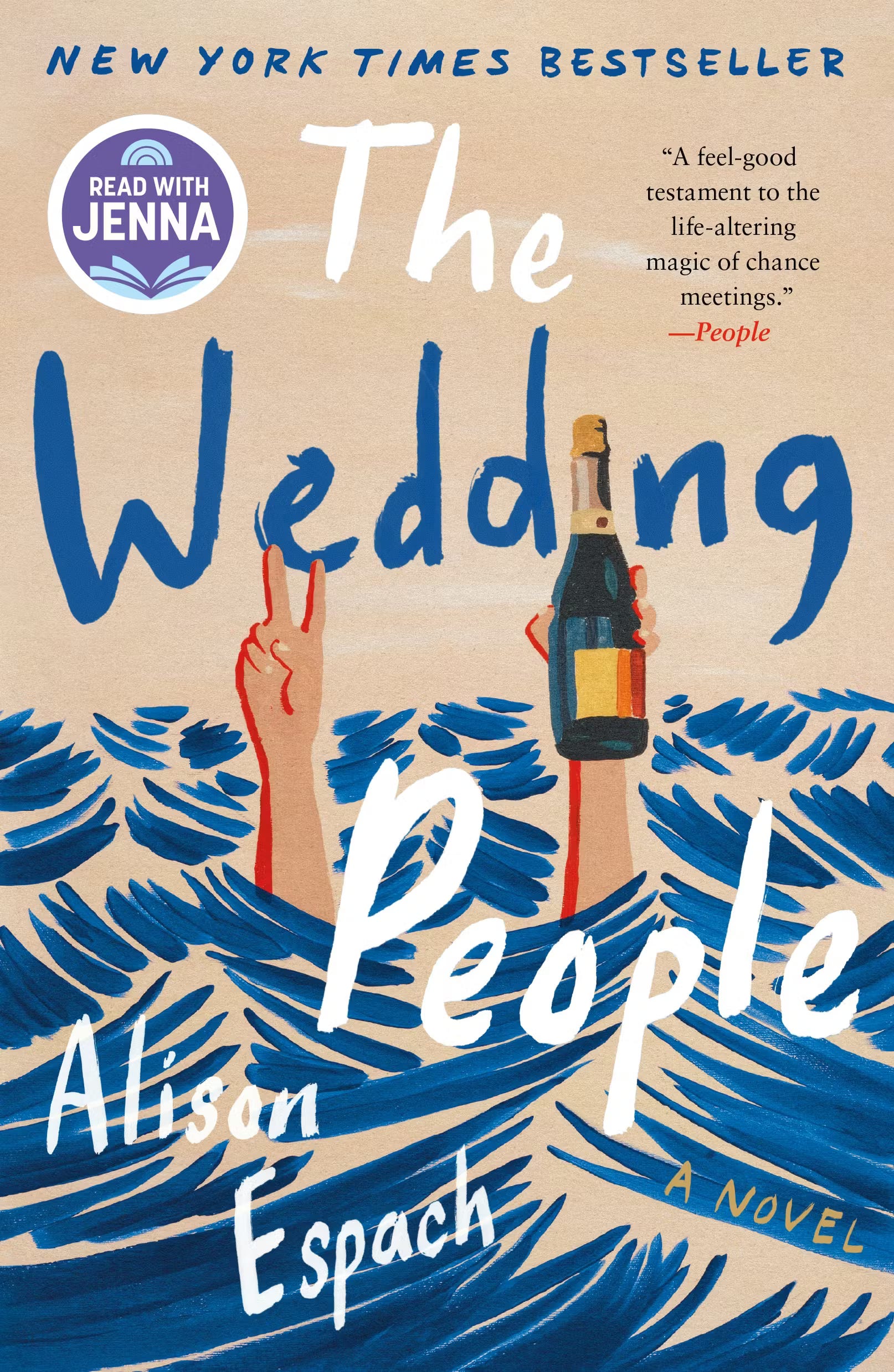
The Wedding People was one of those rare reads that I knew, ten pages in, would be one of my favorite books of the year. Why? Because of the voice. Some books—like Vladimir, Demon Copperhead, and Victorian Psycho—have such an enthralling voice that you’d read the narrator’s grocery list, as my UK editor once put it. Such is the case here. In Phoebe we have a hilarious, wise, and poignant narrator—a woman down on her luck and planning to end her life. When she accidentally finds herself staying in the same hotel as a wedding group, the group upends her life and her plans. I wanted to underline so many passages in this book. (It was a library rental, so I behaved.) In these pages you’ll find familiar thoughts phrased in novel ways, as well as original thoughts that will force you to stop and consider what you’ve just read. And, of course, the plot, character development, pacing, and twists are all superbly done. Believe the hype.
Line of the month
And maybe that’s it: You do things in the moment for the person you hope you might be two years from now.
The Wedding People by Alison Espach
Hope you’re keeping warm,

“This is allowed” is something I have to keep reminding myself. I have never once actually managed to sit and do nothing, but we’re all works in progress!
I love the way you look at the writing life as mountains, hills, and flats. Thank you for sharing how you work. I find it so inspiring!
I love this (and LOVED The Wedding People). I try to get all my heavy-lifting work done by 3pm, when I usually have calls or other tasks to tackle. But all too often, that plan gets derailed in the morning with something else and I don't start writing until later.
Side note: I was somehow suscribed with two different email addresses, so I unsubscribed one of them to avoid the double up.